A customer wanted two versions of the same character: a plush toy approximately 25 cm tall and a keychain approximately 10 cm tall. With the same design and less material in the smaller version, would the price also fall substantially?
In this actual KUSIBEI Toys project, we recommended increasing the smaller version from approximately 10 cm to approximately 12 cm to preserve the larger product's appearance and keep the production techniques consistent. The customer accepted the proposal. With an order of 2,000 units of each version, the price difference between them was approximately 25%.
Why was the price difference so much smaller than the difference in size? The answer lies in how the product is made: its dimensions shrink, but many operations still have to be completed for every individual piece.
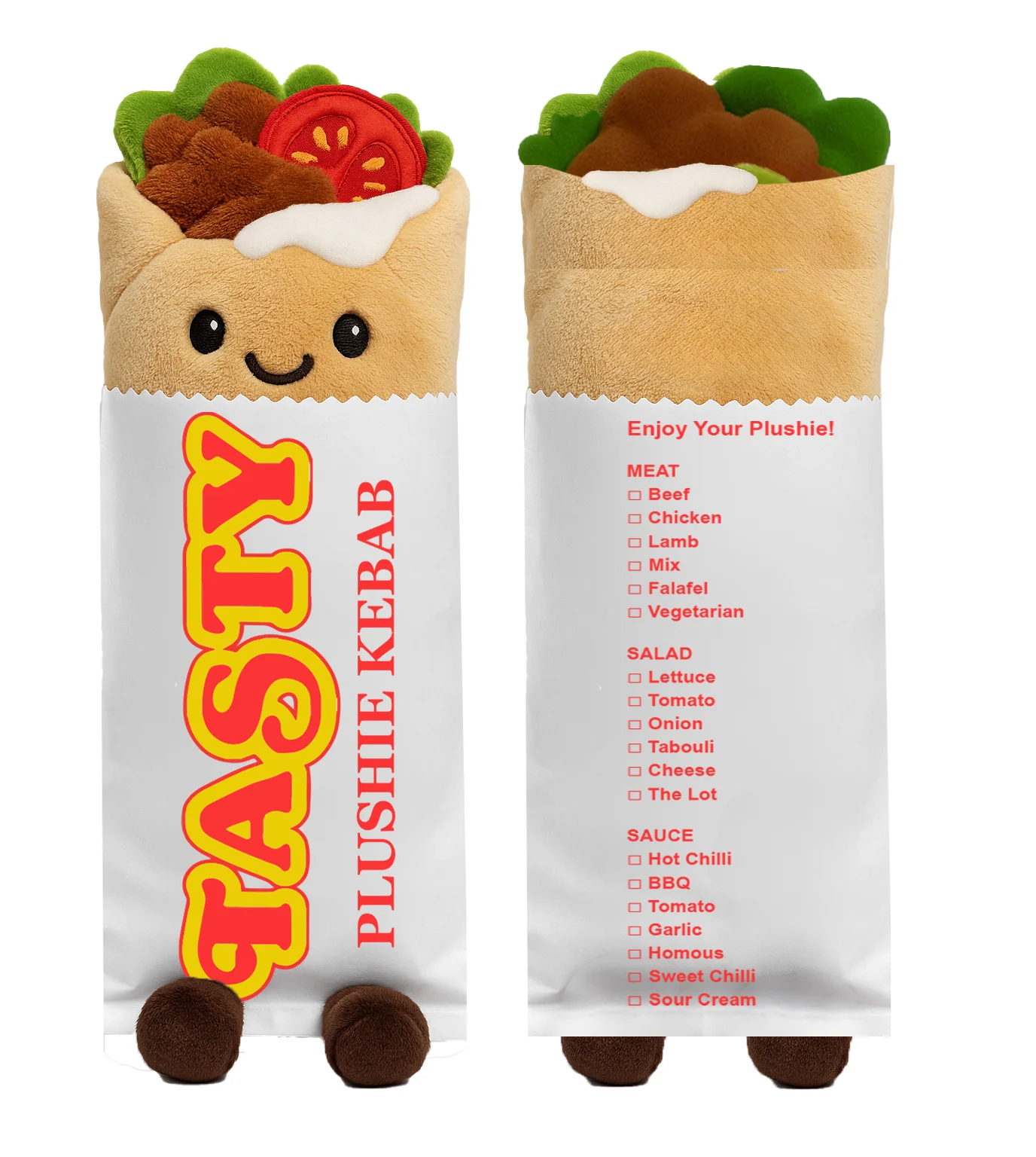
This design combines three-dimensional toppings, embroidered details and printed graphics. A quote must account for the combined costs of these techniques.
From 25 cm to 10 cm, Then 12 cm: How Were the Three Size Options Evaluated?
The priority was to keep the same character consistent across a regular plush and a keychain. The three sizes represented the existing larger version, the customer's initial request for the smaller version and the final agreed smaller size.
| Size option | Role in the project | Main consideration | Final outcome |
|---|---|---|---|
| Approximately 25 cm | Regular plush version | Show the layered toppings and the complete character shape | Used as the reference for the smaller version's techniques and appearance |
| Approximately 10 cm | Customer's initial keychain size | The top details were difficult to reproduce with the intended effect at this scale | Size revised after discussion |
| Approximately 12 cm | Our recommended keychain version | Provide more room to make and assemble the details while keeping the techniques consistent across both versions | Accepted by the customer |
The tomato and vegetable shapes on top of the larger plush require both stitching and adhesive to secure them. These components must show the layers of the toppings and combine with the body to create the complete kebab-wrap shape, so considerable manual work is involved.
The challenge became clear when the customer requested a smaller version of approximately 10 cm. The body could be scaled down, but making, positioning and securing the top components would not become simpler. Preserving the intended appearance in a smaller space would be more difficult.
Because the customer wanted consistent production techniques across both versions, we recommended increasing the smaller version to approximately 12 cm. The extra space made the top details easier to produce and assemble and helped preserve the character's features. The customer accepted the adjustment.
In projects like this, size determines both the product's dimensions and whether there is enough room to manufacture its design details. When developing a smaller version, deciding which details must be retained is the first step toward a suitable size and quote.
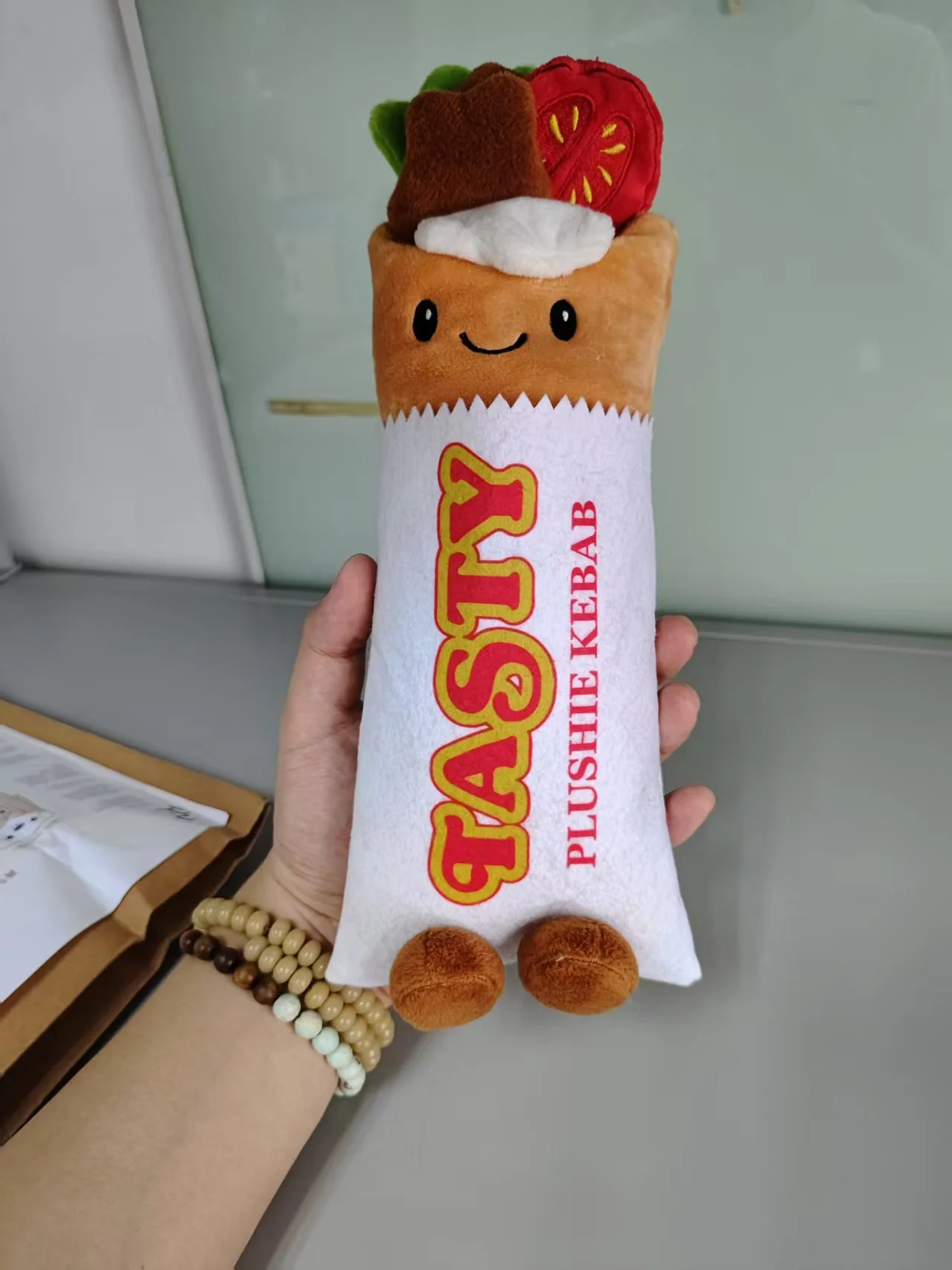
The individual three-dimensional components on top must be made and secured to the body. This work is still necessary when developing the smaller version.
Why Is This Plush Relatively Expensive?
Two factors account for much of this product's cost: substantial manual work and the combination of several production techniques.
The product requires embroidery, printing, cutting, sewing and stuffing, as well as manual attachment of the top components. Each technique involves its own preparation, processing and inspection. Although the finished item looks like one complete plush, it passes through multiple production stages.
We used essentially the same techniques for the larger and smaller versions. The smaller version used less material, but still required embroidery, printing, sewing, stuffing and manual assembly. Size alone therefore cannot tell us how much the prices should differ.
Printing: A More Complex Graphic Does Not Necessarily Cost Much More
Under the printing pricing approach we commonly use for this type of project, costs are mainly related to the printed area. When the printing method, materials and other conditions are similar, more complex artwork does not necessarily increase the price significantly.
For example, simple text in one area and a more elaborate graphic in another area of the same size may not have substantially different costs just because their visual complexity differs. The actual quote still depends on the printing method, processing requirements and order quantity.
This product has prominent branding on the body and relatively dense text on the back. These graphics should be assessed by their actual printed area, rather than simply by the amount of text or number of details.
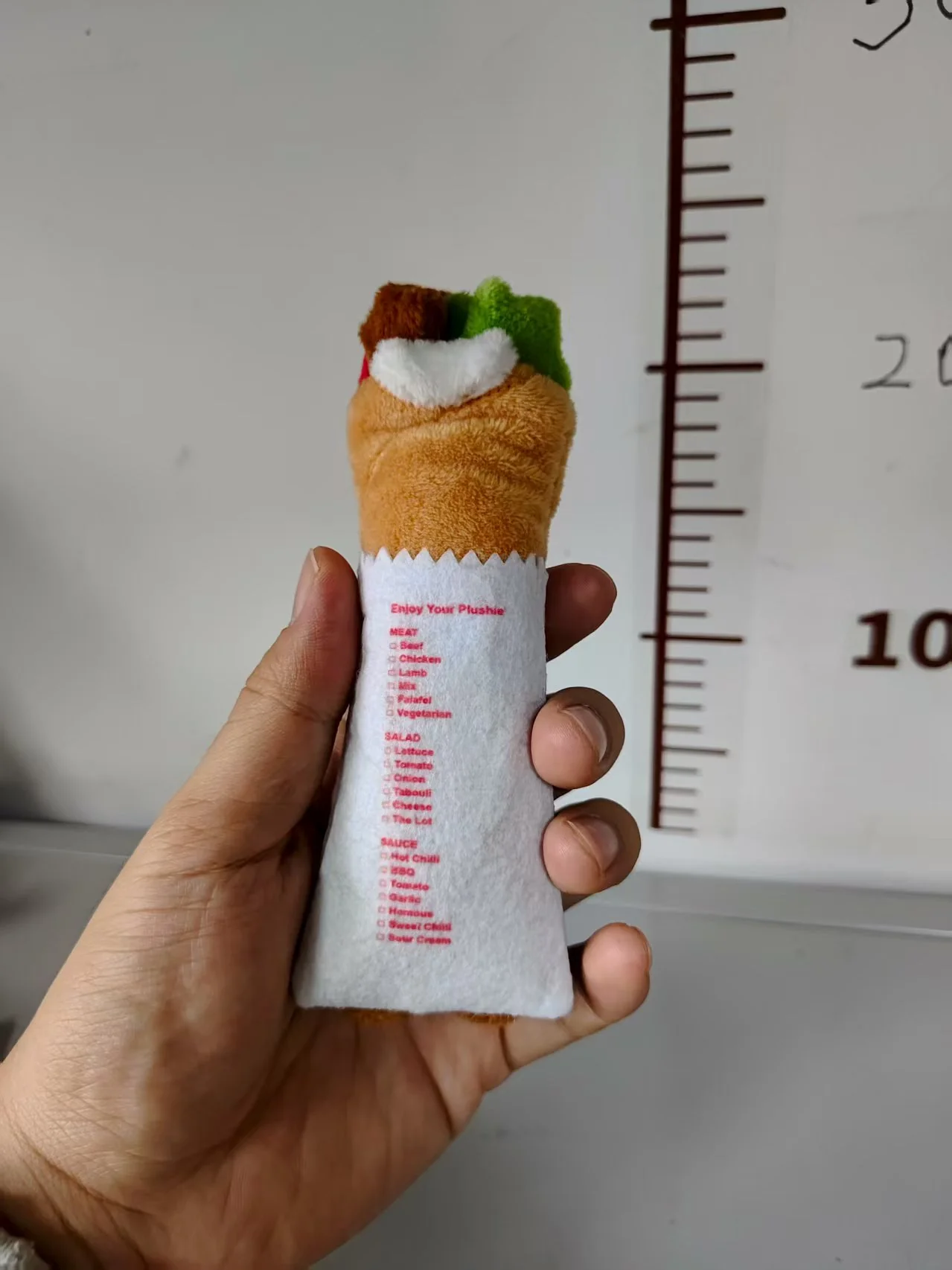
The detailed text on the back shows how printing and three-dimensional features are combined in the same product.
Embroidery: Stitch Count and Colors Connect Complexity More Directly to Cost
Embroidery follows a different cost structure. When assessing embroidery costs, we consider factors such as stitch count and colors. A larger area, denser fill, more details or additional colors can all mean more processing work.
For the same graphic, changes in printing and embroidery prices cannot be compared directly. Area and complexity usually have a more noticeable effect on embroidery costs. Even within the same area, different fill techniques and detail requirements may produce different stitch counts.
During design development, identifying which areas need the texture of embroidery and which are suitable for printing can help customers allocate their budget more effectively.
Manual Assembly: A Smaller Product Still Requires Individual Operations
Securing the tomato and vegetable shapes on top is an important cost factor in this project. Every unit requires these manual operations, and the smaller version must retain them too.
Sewing and stuffing also involve substantial manual work. Equipment is used, but workers still have to handle each product. Reducing the size can save some material without reducing the time needed for these operations by the same proportion.
For a design like this, the smaller product should be treated as a version whose manufacturing requirements need to be reassessed. Its cost depends on how many operations are retained and how easily they can be performed at the smaller size.
Which Costs Are More Likely to Fall as Quantity Increases?
Increasing order quantity usually improves unit costs, but the room for savings differs between production techniques.
Based on our experience with this type of project, embroidery and printing can become more efficient in batch production. At quantities of approximately 1,000 units or more, there is often greater scope to spread preparation costs and optimize processing schedules. The actual reduction depends on the artwork, materials and production conditions.
Manual work can also become more efficient through batch scheduling, but workers still need to spend time on every unit. For products with substantial manual work, the cost of individual manual operations is usually approaching a stable level once quantities exceed approximately 500 units, leaving less room for further reductions as the quantity rises.
The figures of approximately 500 and 1,000 units are reference points from our related projects, rather than universal pricing thresholds for all plush toys.
| Cost component | Potential effect of increasing quantity | Costs that remain |
|---|---|---|
| Embroidery and printing | Spread preparation costs and improve batch-processing efficiency | Actual processing of each product |
| Manual attachment of top components | Optimize operations and production scheduling | Positioning and securing components on every unit |
| Sewing and stuffing | Improve batch-production efficiency | Manual handling required for every unit |
| Materials | Bulk purchasing may improve costs | Actual material consumption per unit |
An order of 2,000 units can therefore support a quote suited to batch production, but it does not eliminate the labor needed to make each piece.
With 2,000 Units of Each Version, Why Was the Price Difference Only About 25%?
This product mainly uses nonwoven fabric and crystal super-soft plush fabric, both in high fabric-weight grades. The larger and smaller versions use essentially the same techniques, so the price difference comes largely from the difference in material consumption caused by their sizes.
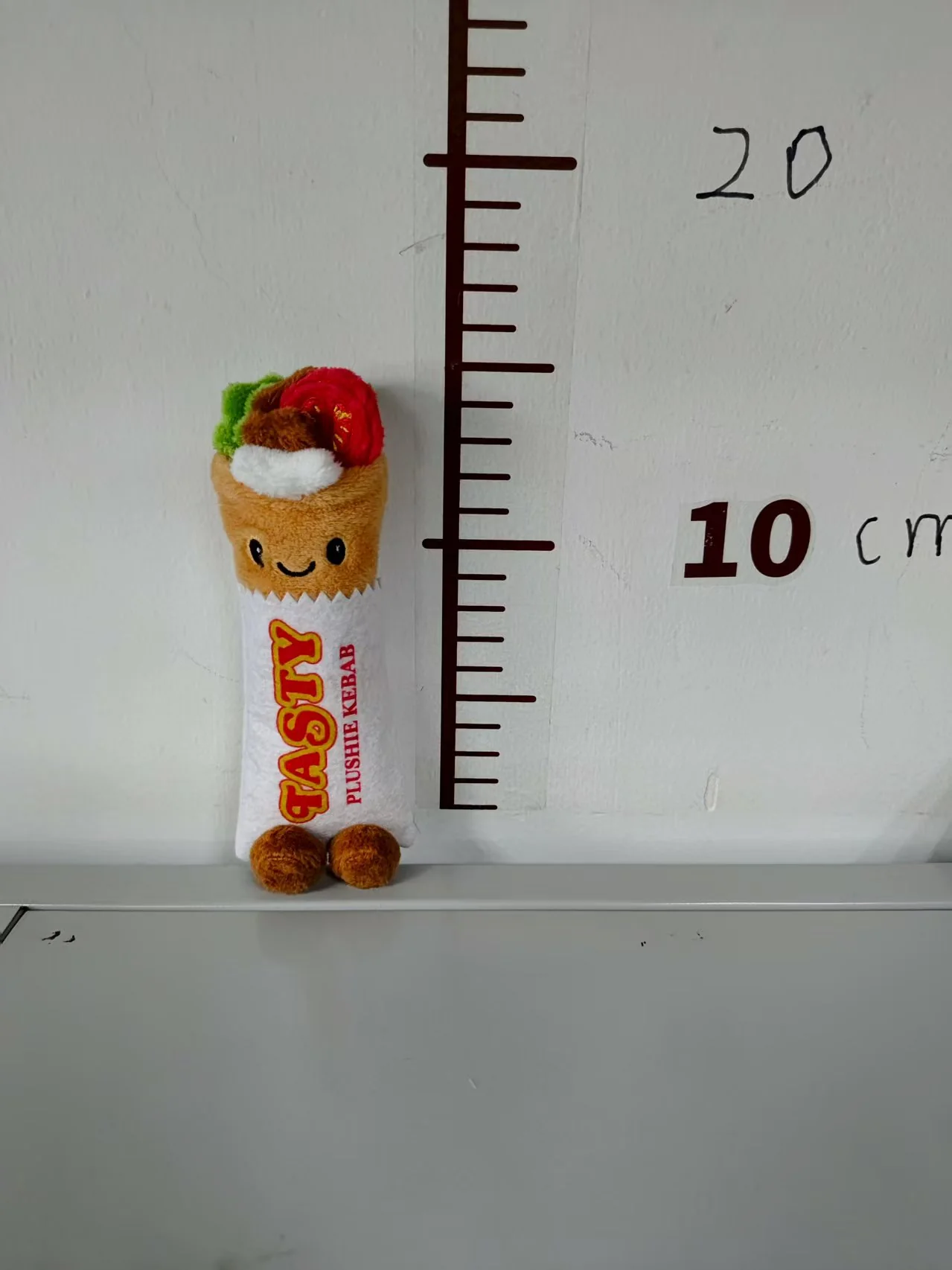
The smaller version still retains the toppings, facial expression and body graphics. The related operations do not disappear when the size is reduced. The image illustrates the design; dimensions are subject to the agreed project specifications.
Comparing the two versions makes the cost structure clearer:
- Material consumption falls. The smaller version needs less fabric and filling, which is an important source of the price difference.
- The main production techniques remain. Embroidery, printing, sewing, stuffing and manual attachment of the toppings are still required.
- Quality requirements remain consistent. The smaller version also requires checks of the graphics, cut pieces and finished appearance.
With 2,000 units ordered per version, the approximately 25 cm plush and approximately 12 cm keychain therefore had a price difference of about 25%. This was the actual quote for this project and should not be applied directly to other designs.
When comparing size options, customers should ask both how much material is saved and which operations are removed. When manual labor accounts for a substantial share of a product's cost, simply reducing its size has a limited effect on cost savings.
Materials, Skilled Workers and In-Process Quality Checks Are Also Part of the Quote
Material costs depend on fabric type, fabric weight and quality requirements as well as size. The high fabric-weight nonwoven and crystal super-soft fabrics selected for this product were conditions we needed to consider when evaluating its cost.
In our quoting experience, material consumption often has a more noticeable effect on price once a product exceeds approximately 30 cm. This is not a fixed point at which the price jumps: the actual change still depends on the product's width, thickness, structure and fabric.
If a customer wants rabbit-fur-style fabric, Toka or other long-pile materials, the cost must be recalculated according to the specific fabric specifications and desired appearance. Products of the same size should not be assumed to have the same price when their materials differ.
Workers' skill levels and pay also affect production costs. For a product with several top components, different graphic techniques and manual assembly, skilled workers help carry out the manufacturing requirements more consistently.
KUSIBEI Toys aims to provide high-quality products through quality materials, skilled workers and in-process inspections. Our checks take place throughout production. For example, we inspect the results after embroidery, printing and cutting so that problems can be identified before the next stage wherever possible.
These checks also require time and staffing. A quote covers more than the materials in the finished item: it also includes the manufacturing and quality-management work needed to turn the design into a consistent product.
How Can You Get a More Meaningful Quote for Different Sizes of the Same Design?
One practical lesson for buyers from this project is to decide which features both versions must retain before comparing sizes and prices.
If the smaller version must keep the larger version's three-dimensional toppings, embroidery and printing, it needs enough space for those techniques and a budget that accommodates the related labor. If budget is the priority, discuss with the manufacturer whether some details can be simplified, then assess the revised appearance and quote.
When requesting a quote, provide:
- The product artwork and character features that must be retained.
- Target sizes for the larger and smaller versions, and whether minor adjustments are acceptable.
- The order quantity for each version.
- Requirements for fabrics, embroidery, printing and three-dimensional components.
- Whether the smaller version needs keychain hardware, and the specific hardware requirements.
- Packaging, target budget and delivery requirements.
For this kebab-wrap plush, increasing the smaller version from approximately 10 cm to approximately 12 cm provided room for the techniques and appearance the customer wanted to retain. The approximately 25% price difference between the two final versions reflected lower material consumption while the main production operations remained.
If you are planning to develop the same character as both a regular plush and a smaller accessory, send your design, target sizes and quantity per version to KUSIBEI Toys. We will assess the actual manufacturing requirements and help you evaluate the trade-offs between size, production techniques and budget.